Open Source Alternatives LogoOpen Source Alternatives
AlternativesBlogAdvertise
Open Source Alternatives LogoOpen Source Alternatives

Stay Updated

Subscribe to our newsletter for the latest news and updates about Alternatives

Open Source Alternatives LogoOpen Source Alternatives

Handpicked Open Source Alternatives to Paid Softwares

Product
  • Search
  • Categories
  • Tag
  • Sign In
Resources
  • Blog
  • Collection
  • Submit
  • Advertise your tool
Company
  • Privacy Policy
  • Terms of Service
  • Refund Policy
  • Sitemap
Copyright © 2026 All Rights Reserved.
Home/Categories/Databases & Storage/ArangoDB
icon of ArangoDB

ArangoDB

Open source alternative to MongoDB Atlas, Azure Cosmos DB and Amazon Neptune

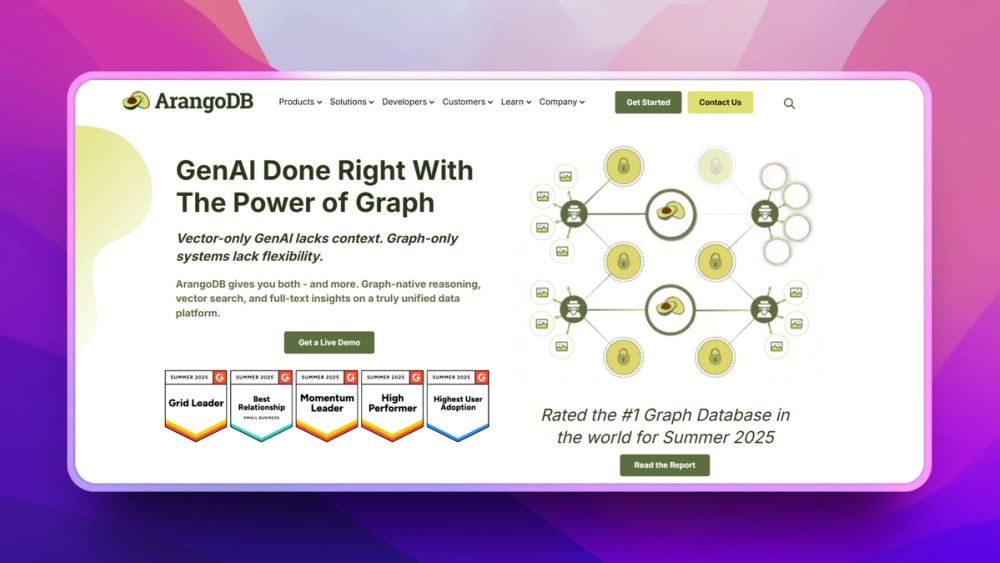
An open-source, distributed multi-model database combining document, graph, key-value, and search capabilities with a unified query language (AQL).

Repository

Stars
14.2K
Forks
880
Last commit
20 days ago
Last verified
May 13, 2026
Repo
arangodb/arangodb ↗

Additional details

14.2K starsC++Active this month
Visit websiteGitHub repo
image of ArangoDB
Contents
  1. 01Who ArangoDB is for
  2. 02The problem it solves
  3. 03How it solves it
  4. 04Strengths and trade-offs
  5. 05ArangoDB vs alternatives
  6. 06Tech stack
  7. 07FAQ
  8. 08Similar open-source tools
TL;DR

ArangoDB is a native multi-model database for documents, graphs, and key-value workloads with a SQL-like query language. It replaces combinations of MongoDB Atlas, Azure Cosmos DB, and graph databases when teams want multiple data models in one database engine. Current repository licensing uses Business Source License terms for ArangoDB Self Managed, so production and service-provider use needs careful review.C++ · 14.2K stars · Active this month

who it's for

Who ArangoDB is for#

Teams modeling documents plus relationships

ArangoDB fits products where records and relationships matter together: identity, permissions, recommendations, catalogs, fraud graphs, and knowledge graphs.

Skip if:

Use a simpler document database if your application never needs graph traversal or multi-model queries.

Developers consolidating data stores

Teams can reduce synchronization work by keeping document and graph data in one database. AQL gives one query language over both models.

Skip if:

Skip it if your organization already has strong operations and performance tooling around a specialized database that fits the workload.

the problem
tech stack · detected from GitHub

What it's built on#

Languages
C++ElixirJavaScriptPythonTypeScript
frequently asked

FAQ#

What is ArangoDB used for?
Is ArangoDB a graph database?
How does ArangoDB compare to MongoDB?
also worth a look

Similar open-source tools#

Apache CouchDB

Apache CouchDB

NoSQL database with multi-primary sync and HTTP API

6.9KErlangApache-2.0
Language
C++
Open issues
813
Contributors
178
First release
2011

Categories

Databases & StorageData & AnalyticsBackend Development

Tags

DatabaseSelf HostedDeveloper ToolsAPI InfrastructureCloud NativeMonitoringSecurity

The problem it solves#

how ArangoDB solves it

How it solves it#

Native multi-model storage

ArangoDB supports document, graph, and key-value models in one database. Teams can model connected data without operating separate document and graph systems.

AQL query language

AQL provides a SQL-like query language for documents and graph traversals. Developers can express joins, filters, aggregations, and traversals in one query layer.

Graph traversal support

ArangoDB can query relationships such as recommendations, fraud paths, access permissions, or network topology without exporting data to a separate graph database.

strengths · trade-offs

Strengths and trade-offs#

Strengths

  • One engine for connected application dataArangoDB reduces the need to run a separate document database and graph database for products with mixed access patterns. This simplifies architecture when the models truly overlap.
  • Flexible modeling for product teamsDevelopers can start with document-style records and add graph relationships as the product evolves. That avoids premature commitment to one narrow database model.

Trade-offs

  • -Specialized databases may still winA dedicated graph database, document database, or key-value store can outperform a multi-model system for extreme single-model workloads. Teams should benchmark the dominant access pattern.
  • -Business Source License restrictionsThe repository license for ArangoDB Self Managed is Business Source License 1.1, which is not an open source license. It allows limited internal production use but restricts commercial offerings that let third parties access, create, or manage databases.
versus alternatives

ArangoDB vs alternatives#

OrientDB

OrientDB

Multi-model NoSQL database: graphs, docs, and key-value

5KJavaApache-2.0
JanusGraph

JanusGraph

Distributed open source graph database for massive scale

5.8KJavaApache-2.0
FerretDB

FerretDB

Run MongoDB apps on PostgreSQL with no code changes needed

11KGoApache-2.0
TiKV

TiKV

Distributed key-value store with ACID transactions at scale

16.7KRustApache-2.0
MongoDB

MongoDB

Popular open source NoSQL document database for modern apps

28.3KC++

ArangoDB is used for applications that need document, graph, and key-value data models in one database. Common use cases include recommendations, identity graphs, catalogs, and connected data.

ArangoDB includes graph database capabilities, but it is a multi-model database rather than only a graph database. It also supports document and key-value workloads.

Applications often need more than one data model. Product catalogs, identity graphs, recommendations, permissions, and event relationships can require documents, graph traversal, and key-value access in the same product.\u000A\u000AUsing separate databases for each model increases operational work, data synchronization risk, and query complexity. Managed multi-model services reduce operations but can lock teams into vendor-specific cloud behavior and pricing.

ArangoDB vs MongoDB Atlas\u000A\u000AArangoDB and MongoDB Atlas both handle document data, but ArangoDB adds native graph and key-value models while MongoDB Atlas provides a mature managed document database service.\u000A\u000A| Criterion | ArangoDB | MongoDB Atlas |\u000A| --- | --- | --- |\u000A| License | Business Source License 1.1 for self-managed code | Proprietary managed service around MongoDB |\u000A| Data models | Document, graph, key-value | Document database with related services |\u000A| Query model | AQL across models | MongoDB query language and aggregation |\u000A| Best fit | Connected data with mixed models | Managed document database workloads |\u000A\u000AArangoDB is the better choice when graph traversals and documents belong in the same database. MongoDB Atlas is still better when managed operations, ecosystem maturity, and document-first workloads are the priority.

MongoDB is primarily a document database, while ArangoDB combines document and graph models in one engine. MongoDB has broader ecosystem adoption; ArangoDB is stronger when graph traversal and documents need to live together.