

Who Helicone is for#
AI product teams watching model spend
Use Helicone when product and engineering need to connect LLM cost, latency, and quality to users, features, and prompts.
Skip if:
Your app only makes occasional internal model calls and raw logs already answer your debugging questions.
Developers debugging prompt regressions
Use Helicone when prompt changes, model switches, or user behavior create production issues that need request-level traces.
Skip if:
You need full-stack APM first and LLM tracing is only a minor part of your observability needs.
The problem it solves#
LLM apps fail in ways normal web analytics do not explain. Teams need to know which prompts cost the most, which users trigger slow requests, where outputs degrade, and how model changes affect production behavior.
Without request-level observability, debugging becomes guesswork. Engineers inspect logs manually, product teams lack usage visibility, and finance teams cannot connect model spend to features or customers.
How it solves it#
LLM request tracing
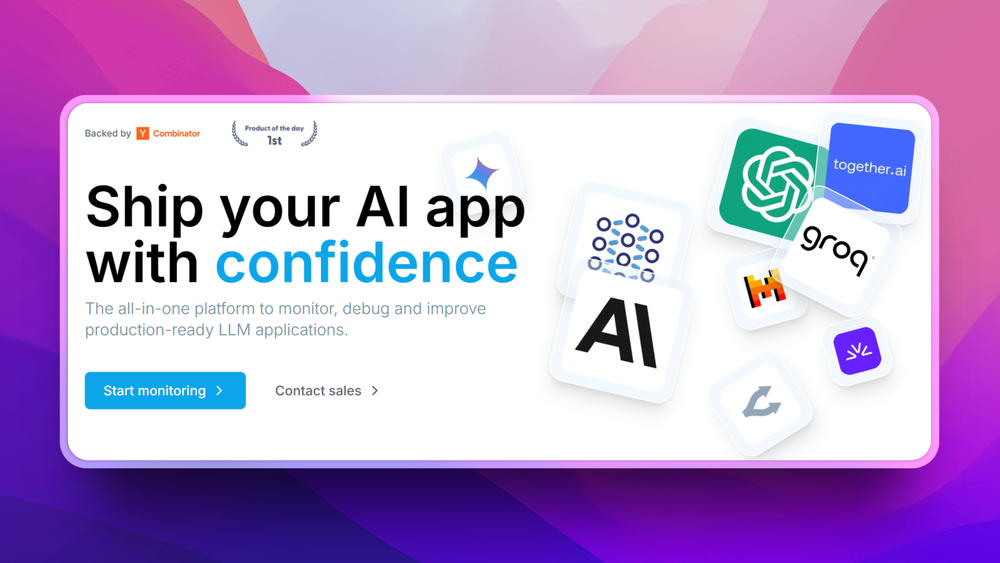
Helicone captures model requests and responses so teams can inspect prompts, latency, status, usage, and production behavior from one observability surface.
Cost and usage analytics
Track token usage and spend across models, users, and features, giving teams a clearer view of where AI costs come from.
Prompt and user debugging
Request metadata helps developers connect model behavior to application users, prompts, and workflows instead of searching raw logs.
Strengths and trade-offs#
Strengths
- Purpose-built for LLM appsHelicone focuses on model traffic rather than generic logs, making it easier to answer AI-specific questions about prompts, tokens, latency, and outputs.
- Self-hostable observability optionTeams with privacy or compliance constraints can evaluate a self-hosted path instead of sending all model telemetry to a closed observability vendor.
Trade-offs
- -Adds an observability integration layerHelicone still needs to sit in the model request path or application instrumentation. Teams should validate latency, privacy, and retention requirements before routing production traffic.
What it's built on#
- Languages
- PythonTypeScript
- Frameworks
- LangChainNext.jsReact
FAQ#
What does Helicone monitor?
Helicone monitors LLM requests, prompts, responses, latency, status, token usage, and cost so teams can debug AI application behavior.
Is Helicone a LangSmith alternative?
Helicone can replace LangSmith for LLM request observability and usage analytics. LangSmith remains stronger for teams already committed to the LangChain ecosystem.
Can Helicone be self-hosted?
Helicone documents self-hosting options, which helps teams keep model telemetry under their own infrastructure policies.
Similar open-source tools#

thoughtdag
Make LLM context visible, editable, and graph-structured

Breadcrumb
Open source LLM tracing and monitoring for AI agents

Langfuse
Trace and debug LLM prompts while monitoring inference costs

Overmind
Turn agent production traces into fine-tuned models you own.

agentswarms
Self-hosted AI agents, swarms, RAG, and BI in one platform

guaardvark
Self-hosted AI workstation with agents, video, voice, and RAG.