

Who Amplication is for#
Platform teams defining backend golden paths
Amplication helps platform teams turn approved service architecture into repeatable generated projects. New services can start with expected database, API, and project conventions.
Skip if:
Skip it if your organization does not have enough repeated backend patterns to justify maintaining generators and templates.
Product squads launching new service APIs
Developers can use Amplication to start API services faster while keeping ownership of the generated code. This fits teams that need speed but cannot accept a black-box backend runtime.
Skip if:
Use Xano or Backendless if your team wants a hosted no-code backend and does not plan to maintain generated code.
The problem it solves#
Backend teams waste time rebuilding the same service foundations: authentication, database models, APIs, permissions, project layout, and deployment conventions. As teams grow, each new service drifts from the last one, which makes onboarding, security review, and maintenance harder.\u000A\u000ANo-code backend tools can speed up early prototypes, but they often limit code ownership and architecture choices. Larger engineering organizations usually need repeatable service generation that still produces real code developers can review, modify, and run in their own stack.
How it solves it#
Backend service generation
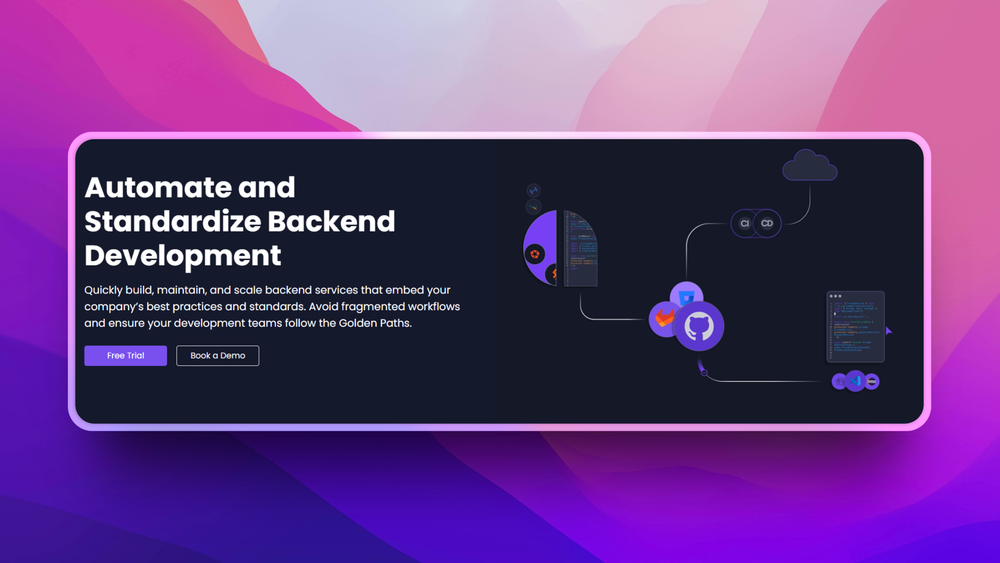
Amplication generates backend services with APIs, data models, and project structure from defined resources. It helps teams create consistent service foundations instead of starting every backend from scratch.
Golden path workflows
The project focuses on standardized development paths for teams, including templates and practices that keep generated services aligned with organizational conventions.
Developer-owned generated code
Amplication creates code developers can inspect and extend rather than locking the backend inside a hosted no-code runtime. That is useful for teams that need long-term ownership of generated services.
Strengths and trade-offs#
Strengths
- Reduces repeated backend scaffoldingTeams can standardize common service patterns once, then generate new projects faster. This is especially valuable when multiple squads create similar APIs and database-backed services.
- Better fit for engineering teams than no-code backendsAmplication targets developers who want generated code and platform standards. It avoids the main no-code backend tradeoff: speed at the cost of architectural control.
Trade-offs
- -Maintenance-mode product statusAmplication's official site says it remains available for the community and existing customers while the team builds Overcut. New teams should validate roadmap, support, and migration expectations before choosing it as a strategic developer platform.
- -Requires template governanceCode generation only helps if the templates stay current. Teams need owners for generated patterns, dependencies, security defaults, and upgrade paths.
- -Apache-2.0 core with enterprise directoryMost of the project is Apache-2.0, while components under ee/ use Amplication Enterprise Edition terms. Teams should confirm whether required plugins or platform features live in the Apache-2.0 core or the enterprise directory.
Amplication vs alternatives#
Amplication vs Xano\u000A\u000AAmplication and Xano both help teams create backends faster, but Amplication focuses on developer-owned generated code while Xano focuses on a hosted no-code backend.\u000A\u000A| Criterion | Amplication | Xano |\u000A| --- | --- | --- |\u000A| Primary model | Code generation and golden paths | Hosted no-code backend |\u000A| Code ownership | Generated code for developers | Runtime managed by Xano |\u000A| Best fit | Engineering teams standardizing services | Non-developers building APIs quickly |\u000A| License | Apache-2.0 core with separate ee/ terms | Proprietary SaaS |\u000A\u000AAmplication is the better choice when developers need service consistency and code ownership. Xano is still a better fit for non-technical builders who value a managed backend over source-level control.
What it's built on#
- Languages
- C#JavaScriptTypeScript
- Frameworks
- ExpressNestJSReact
- Runtimes
- .NETNode.js
- Infrastructure
- AWS
- Messaging
- Kafka
- Cache
- Redis
- Tooling
- GraphQLWebpack
FAQ#
What does Amplication generate?
Amplication generates backend service code, APIs, and project structure based on defined models and organizational patterns. It is aimed at developers rather than non-technical no-code users.
Is Amplication a Xano alternative?
Amplication can replace Xano when a team wants generated backend code and service standards instead of a hosted no-code backend. Xano is simpler for non-developers who want a managed backend runtime.
Is Amplication open source?
Amplication is mostly Apache-2.0, with enterprise-edition components under ee/ licensed separately. The official site now presents Amplication as available for community and existing customers while the team builds Overcut.
Is Amplication still actively developed?
Amplication is available for community users and existing customers, but the official site presents it as maintenance mode while the team builds Overcut. Treat it as a useful code-generation project, not a fast-moving platform bet without current roadmap validation.
Similar open-source tools#

InsForge
Backend-as-a-service platform built for AI coding agents

Supabase
Open source Firebase: Postgres database, auth, and file storage

Directus
Wrap any SQL database with REST and GraphQL APIs and an admin UI

Manifest
One YAML file gives your app auth, CRUD, storage, and admin UI

Firebase Ios Sdk
Open source Apple SDK for Firebase auth, data, push and crashes

PiG
Pi's coding agent, in Go. One binary, no Node.js required.