
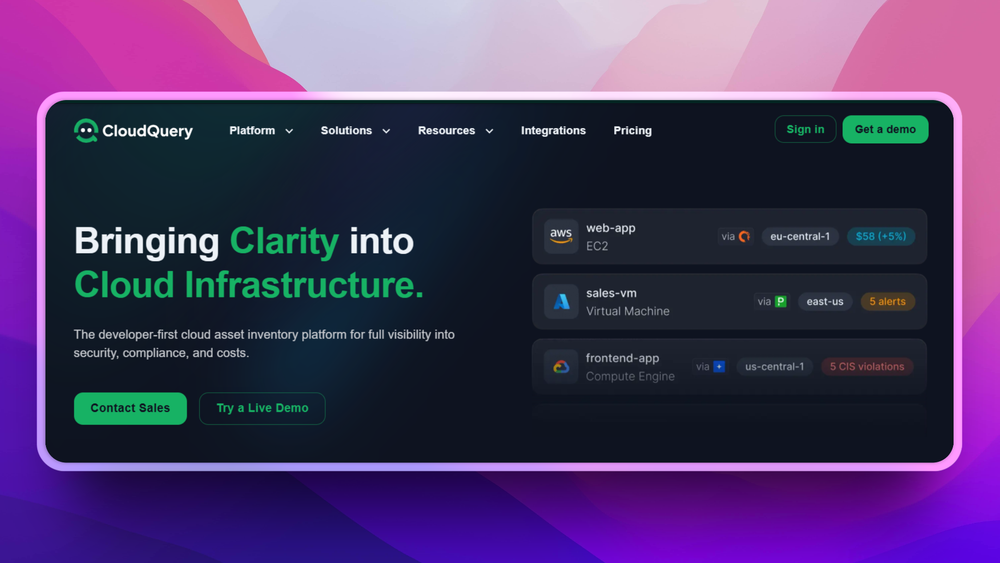
CloudQuery is an open source cloud asset inventory platform that syncs resource data from AWS, Azure, GCP, and 150+ other sources into any SQL database, giving security and infrastructure teams a queryable record of their entire cloud estate.
The Problem
Cloud environments grow faster than inventory systems can track. Security teams need to answer questions like "what S3 buckets are public?" or "which compute instances have no MFA on their associated IAM users?" Commercial cloud security tools like Wiz and Orca provide this visibility but at enterprise licensing prices that are out of reach for smaller teams. Query results are also locked inside the vendor's platform.
How CloudQuery Solves It
CloudQuery extracts resource metadata from cloud provider APIs and writes it into a PostgreSQL, BigQuery, Snowflake, or other SQL database you control. Write standard SQL queries to investigate your inventory. Use it as a data source for a Grafana dashboard, pipe results into a SIEM, or run scheduled queries for compliance checks. MPL-2.0 license applies with a commercial option for enterprise use.
Key Features
- 150+ source plugins: AWS, Azure, GCP, GitHub, Kubernetes, Datadog, and more
- Syncs cloud resource metadata to PostgreSQL, BigQuery, Snowflake, and other SQL targets
- Standard SQL querying: no proprietary query language or vendor dashboard required
- Pre-built policies for CIS Benchmarks, SOC2, PCI DSS, and other compliance frameworks
- Incremental sync: fetch only changed resources to keep the database fresh without full re-scans
Who It's For
CloudQuery is best for security engineers, cloud architects, and platform teams who need a queryable cloud asset inventory in their own data infrastructure, without the cost of an enterprise cloud security platform.
Compared to Wiz
Unlike Wiz, which provides a managed cloud security platform at enterprise pricing with results locked to the Wiz dashboard, CloudQuery syncs asset data into your own SQL database. You query with any SQL tool, build your own dashboards, and integrate inventory data into your existing data pipelines.

