

Who WooCommerce is for#
WordPress site owners adding ecommerce
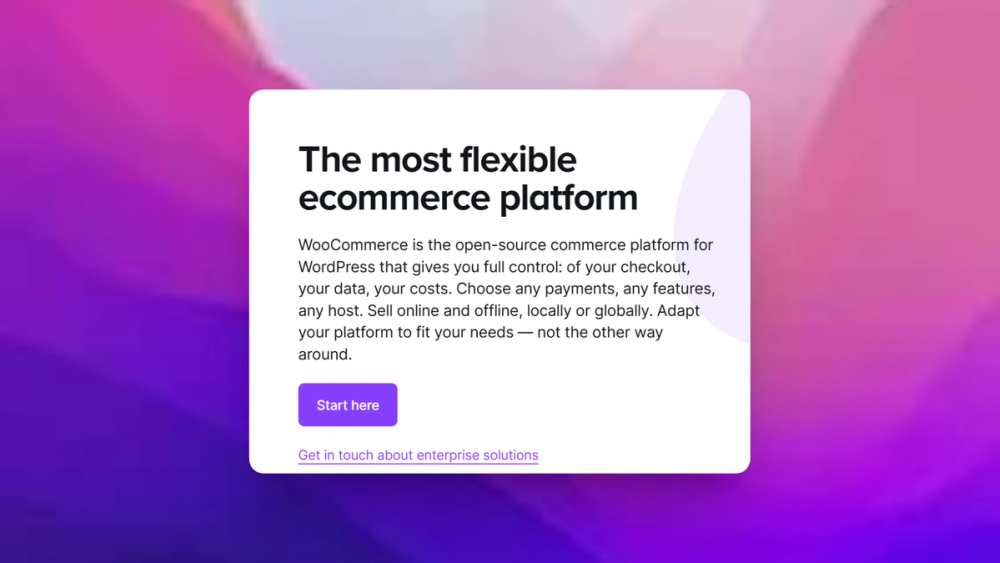
WooCommerce fits publishers, creators, and small businesses that already use WordPress and want products and checkout without moving to a separate platform.
Skip if:
Skip if you want a hosted commerce platform where hosting, PCI scope, and most maintenance are abstracted away.
Agencies building custom storefronts
Agencies can extend WooCommerce with custom plugins and theme work while keeping clients on a familiar CMS.
Skip if:
Skip if the client needs enterprise commerce workflows with strict support SLAs from day one.
The problem it solves#
Hosted ecommerce platforms simplify the first store launch, but they also centralize themes, checkout behavior, app costs, and platform rules. Merchants that already publish on WordPress often end up maintaining a separate storefront, syncing content and customer data across systems, and paying extra for features that could live in their own site.
How it solves it#
WordPress-native commerce
Adds ecommerce workflows to WordPress, including products, cart, checkout, and order management inside the same content system.
Extension-based store model
The monorepo contains core plugins, packages, and tools used for WooCommerce and extensions, which supports a large plugin ecosystem.
Developer-owned customization
Developers can inspect source, build extensions, and adapt store behavior in PHP and JavaScript instead of being limited to hosted platform settings.
Strengths and trade-offs#
Strengths
- Best fit for WordPress storesWooCommerce keeps publishing and commerce in one WordPress environment, which matters for content-led businesses and existing WordPress sites.
- No closed storefront runtimeStore owners can host the application themselves, choose their infrastructure, and modify the code path when a paid SaaS setting is too narrow.
Trade-offs
- -WordPress operations are still your responsibilityPerformance, updates, plugin compatibility, backups, and security all depend on the store owner or hosting provider. Shopify is easier for teams that do not want to manage WordPress.
WooCommerce vs alternatives#
WooCommerce vs Shopify
WooCommerce is the better choice when your commerce site already depends on WordPress content, custom plugins, or self-hosted control. Shopify is still the better choice for merchants who want a hosted store platform with less infrastructure work and a managed app marketplace.
What it's built on#
- Languages
- JavaScriptPHPTypeScript
- Frameworks
- ReactWordPress
- Tooling
- Webpack
FAQ#
Is WooCommerce open source?
Yes. WooCommerce is developed in public, and its core plugin code is available through the WooCommerce GitHub monorepo.
Does WooCommerce require WordPress?
Yes. WooCommerce is a WordPress ecommerce plugin, so it is a fit when WordPress is part of the stack.
Is WooCommerce better than Shopify?
WooCommerce is better when you want WordPress ownership and deep customization. Shopify is often better when you want a hosted storefront with less maintenance.
Similar open-source tools#

PrestaShop
Open source eCommerce platform for online stores

Sylius
Headless Symfony commerce for complex B2B and B2C stores

Bagisto
Laravel eCommerce with headless API and no transaction fees

Saleor
Open source headless e-commerce platform with GraphQL API

WordPress

Gumroad
Open source platform for selling digital products directly