

Who Leantime is for#
Small teams replacing ClickUp or Asana
Leantime fits teams that want boards plus goals, risks, docs, and timelines without per-seat SaaS dependence.
Skip if:
Skip if your team wants a hosted workspace and no server operations.
Neurodiverse teams needing clearer planning
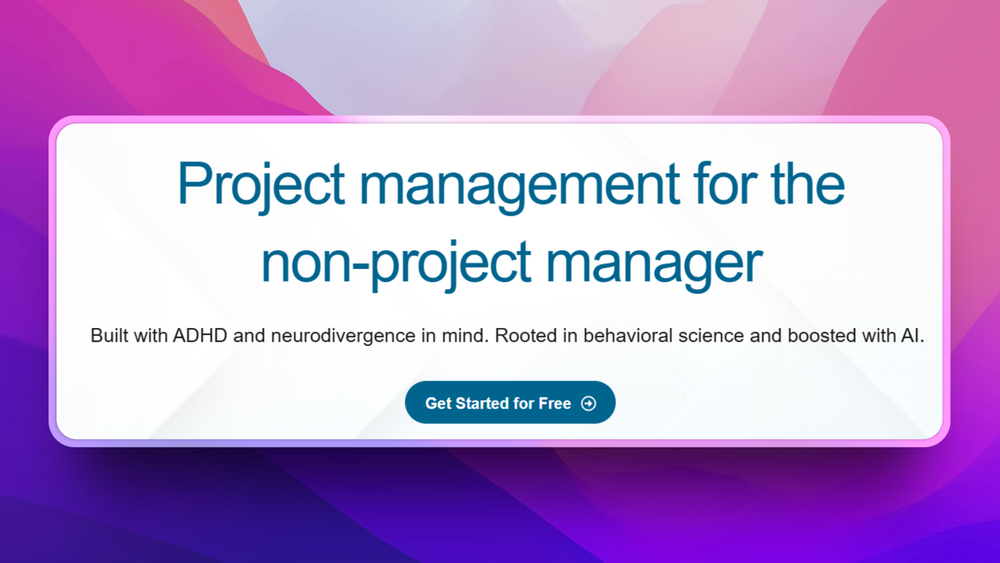
The project explicitly designs with ADHD, dyslexia, and autism in mind, making it worth evaluating when tool clarity is part of the requirement.
Skip if:
Skip if your organization needs deep enterprise portfolio governance first.
The problem it solves#
Project management tools often split teams between simple boards that lack planning depth and heavyweight systems that only trained project managers enjoy using. Strategy documents, goals, ideas, risks, tasks, time tracking, and retrospectives drift across separate tools, which makes execution harder for small teams.
How it solves it#
Multiple project views
Includes kanban, gantt, table, list, calendar, subtasks, dependencies, milestones, sprints, and time tracking in the OSS version.
Strategy and planning canvases
Combines goals, metrics, idea boards, lean canvas, business model canvas, SWOT, and risk analysis with execution workflows.
Team knowledge and admin controls
Adds wikis, docs, file storage, comments, roles, two-factor authentication, LDAP, OIDC, plugins, API access, and chat integrations.
Strengths and trade-offs#
Strengths
- Designed for non-project managersLeantime explicitly positions itself for teams that need project structure without forcing everyone into a Jira-style workflow.
- Broad OSS feature setThe README states that listed project, planning, knowledge, and admin features are included in the open source version.
Trade-offs
- -Broad scope can be heavier than a task boardTeams that only need a simple kanban board may find the strategy, docs, time tracking, and admin surface more than they want to run.
Leantime vs alternatives#
Leantime vs ClickUp
Leantime is the better choice when a team wants self-hosted project planning with strategy canvases, docs, and execution workflows in one open source system. ClickUp is still a better fit when the priority is a managed SaaS workspace with a broad integration marketplace and no server maintenance.
What it's built on#
- Languages
- JavaScriptPHP
- Tooling
- Webpack
FAQ#
Is Leantime open source?
Yes. Leantime is an open source project management system, and the README states the listed features are included in the OSS version.
Can Leantime replace Jira?
It can replace Jira for teams that need planning and execution without Jira administration overhead. Jira may still fit large software organizations with established workflows and marketplace dependencies.
Does Leantime support self-hosting?
Yes. Leantime is intended to be self-hosted or used through its hosted offering, depending on how much control the team wants.
Similar open-source tools#

Kaneo
9,507 GitHub starsSelf-hosted project management without the bloat
Alternative to Linear

Taiga
383 GitHub starsAgile project management for Scrum, Kanban, and hybrid teams
Alternative to Jira
Jira

Focalboard
26,477 GitHub starsOpen source project management: Kanban, Scrum, and lists
Alternative to Trello

OpenProject
16,450 GitHub starsPlan projects with Gantt, Scrum, and Kanban, all self-hostable
Alternative toJira

Windshift
349 GitHub starsSelf-hosted work management for teams leaving Jira
Alternative toJira

OpenBug
23 GitHub starsOpen source collaborative workspace for debugging issues
Alternative to Claude Code