
Open Source Alternatives LogoOpen Source Alternatives
AlternativesBlogAdvertise
Open Source Alternatives LogoOpen Source Alternatives

Stay Updated

Subscribe to our newsletter for the latest news and updates about Alternatives

Open Source Alternatives LogoOpen Source Alternatives

Handpicked Open Source Alternatives to Paid Softwares

Product
  • Search
  • Categories
  • Tag
  • Sign In
Resources
  • Blog
  • Collection
  • Submit
  • Advertise your tool
Company
  • Privacy Policy
  • Terms of Service
  • Refund Policy
  • Sitemap
Copyright © 2026 All Rights Reserved.
Home/Categories/DevOps & CI/CD/Minikube
icon of Minikube

Minikube

Open source alternative to Docker Desktop and OpenShift Local

image of Minikube
Contents
  1. 01Who Minikube is for

Repository

Stars
31.8K
Forks
5.2K
License
Apache-2.0
Latest
v1.38.1
Last commit
18 days ago
Last verified
May 13, 2026
Repo
kubernetes/minikube ↗

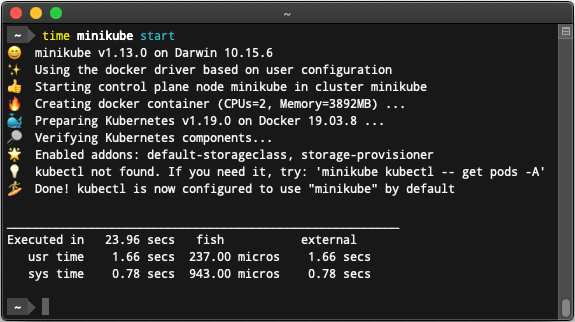
minikube sets up a local Kubernetes cluster on macOS, Linux, and Windows for developers and Kubernetes users.

31.8K starsGoApache-2.0Active this month
Visit websiteGitHub repo
02
The problem it solves
  • 03How it solves it
  • 04Strengths and trade-offs
  • 05Minikube vs alternatives
  • 06Tech stack
  • 07FAQ
  • 08Similar open-source tools
  • TL;DR

    Minikube runs a local Kubernetes cluster for development, testing, demos, and learning. It replaces remote cluster dependency for developers who need Kubernetes behavior on a laptop before pushing workloads to managed environments.Apache-2.0 · Go · 31.8K stars · Active this month

    who it's for

    Who Minikube is for#

    Developers testing Kubernetes manifests

    Use Minikube to verify Deployments, Services, ConfigMaps, and ingress behavior before opening a PR.

    Skip if:

    Skip if your workload depends on production-only cloud services that cannot be mocked locally.

    Engineers learning Kubernetes

    Use a local cluster to practice kubectl, pods, services, and add-ons without cloud cost.

    Skip if:

    Skip if you need realistic multi-node performance or production reliability testing.

    the problem

    The problem it solves#

    how Minikube solves it

    How it solves it#

    Local Kubernetes cluster

    Minikube creates a Kubernetes cluster on a local machine, letting developers test manifests, services, ingress, storage, and workloads before remote deployment.

    Multiple drivers

    Minikube supports several runtime and VM drivers, which helps teams match local clusters to their laptop and operating system setup.

    Add-on ecosystem

    Minikube includes common Kubernetes add-ons for local development, reducing manual setup for ingress, dashboards, registry behavior, and more.

    strengths · trade-offs

    Strengths and trade-offs#

    Strengths

    • Fast Kubernetes feedback loopDevelopers can test locally without waiting for shared cluster resources or cloud provisioning.
    • Good teaching environmentMinikube is useful for learning Kubernetes concepts because one developer can control the whole cluster safely.

    Trade-offs

    • -Not production KubernetesMinikube is a local development cluster. It does not replace managed Kubernetes, production networking, autoscaling, cluster security, or multi-node operations.
    versus alternatives

    Minikube vs alternatives#

    tech stack · detected from GitHub

    What it's built on#

    Languages
    Go
    Infrastructure
    Kubernetes
    frequently asked

    FAQ#

    What is Minikube?

    Minikube is a tool for running a local Kubernetes cluster on a developer machine.

    Does Minikube replace production Kubernetes?

    No. Minikube is for local development, testing, demos, and learning.

    Who should use Minikube?
    also worth a look

    Similar open-source tools#

    Capgo

    Capgo

    Over-the-air live updates for Capacitor mobile apps

    767JavaMPL-2.0
    Pulumi

    Pulumi

    Write infrastructure as code in TypeScript, Python, or Go

    25.2KGoApache-2.0
    CLI-Anything

    CLI-Anything

    Empower AI agents with agent-native CLIs

    41.1KPythonApache-2.0
    hysteria

    hysteria

    Fast and censorship-resistant proxy solution

    21.2KGoMIT
    RuView

    RuView

    Intelligent AI agents for real-world applications

    59.5KRustMIT
    Nginx

    Nginx

    Serve static files, proxy requests, terminate TLS, and cache content.

    30.5KCBSD-2-Clause

    Additional details

    Language
    Go
    Open issues
    608
    Contributors
    1,046
    First release
    2016

    Categories

    DevOps & CI/CDDeveloper ToolsCloud & Hosting

    Tags

    KubernetesDevOps ToolsCloud NativeDeveloper ToolsCLISelf Hosted

    Kubernetes development slows down when every test requires a shared remote cluster. Developers need a local environment that behaves like Kubernetes without cloud cost, shared namespace conflicts, or long feedback loops.

    Minikube vs Docker Desktop Kubernetes

    Minikube is better when developers want a Kubernetes-focused local cluster with driver choices and add-ons. Docker Desktop Kubernetes is simpler when the team already standardizes on Docker Desktop and only needs a basic local cluster.

    Developers, platform engineers, and learners who need a local Kubernetes feedback loop should use Minikube.