

Who Modelence is for#
Founders building a web product
Modelence fits founders who want a source-visible framework covering common backend and web app pieces.
Skip if:
You already have a mature framework stack and only need one missing library.
Developers comparing app frameworks
The project belongs on a shortlist when evaluating opinionated full-stack web frameworks.
Skip if:
You need a battle-tested enterprise framework with long-term vendor support.
The problem it solves#
Early web products often spend too much time on plumbing: authentication, data models, APIs, admin flows, deployment, and hosting choices. Every separate library or service adds integration work before the product has real users.
A framework can reduce that setup burden, but only if teams understand what it owns and where it constrains architecture. Developers need a clear stack choice, not a vague promise of faster app building.
How it solves it#
Full-stack framework positioning
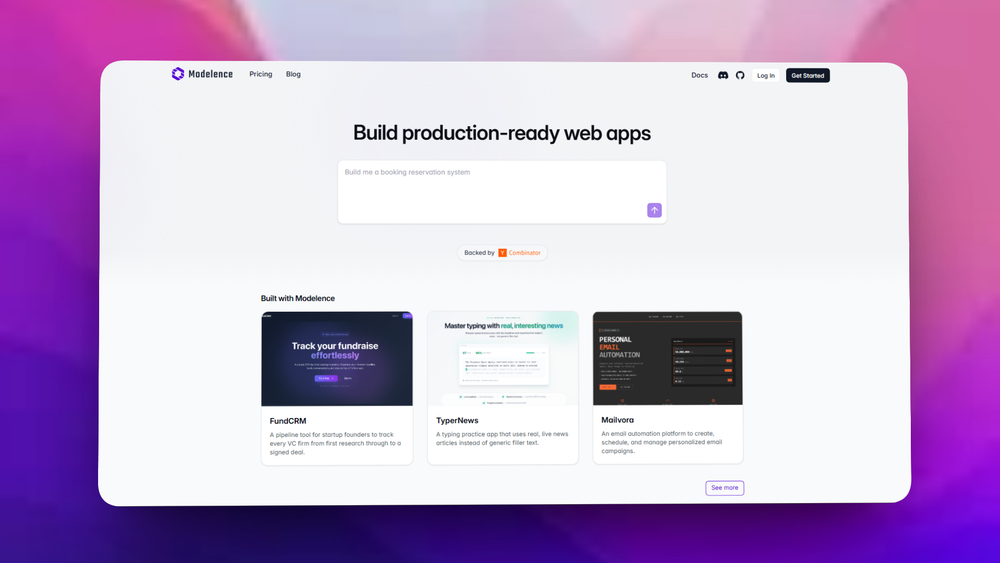
Modelence is positioned across web development, backend development, authentication, database, and API development.
Cloud-native app focus
The tag set suggests a framework aimed at deployable web products rather than isolated UI components.
Developer-owned application stack
Modelence is relevant for teams evaluating source-visible alternatives to hosted app-builder platforms.
Strengths and trade-offs#
Strengths
- Reduces early stack decisionsModelence is most useful when a team wants one framework to cover common application infrastructure choices.
- Good founder prototype fitThe combined web, backend, and hosting context can appeal to small teams trying to move from idea to working app quickly.
Trade-offs
- -Framework lock-in needs reviewBefore adoption, teams should verify routing, data, auth, deployment, license, and escape-hatch details from current documentation.
What it's built on#
- Languages
- TypeScript
- Frameworks
- React
- Databases
- MongoDB
- Runtimes
- Node.js
- Infrastructure
- AWS
FAQ#
What is Modelence used for?
Modelence should be evaluated as a full-stack web application framework covering backend and developer workflow concerns.
Does Modelence include authentication?
Authentication appears to be part of the Modelence evaluation scope, but teams should verify the exact auth model in current upstream documentation before adoption.
What should teams verify before using Modelence?
Confirm license, deployment model, database assumptions, authentication boundaries, and production-readiness from official docs.
Similar open-source tools#

Supabase
Open source Firebase: Postgres database, auth, and file storage

Appwrite
Self-hosted backend: auth, databases, storage, and functions

Nhost
Firebase alternative: GraphQL, Postgres auth, and file storage

Kuzzle
Self-hosted backend with real-time API and search built in

Encore
Auto-generate infrastructure from your TypeScript or Go code

Manifest
One YAML file gives your app auth, CRUD, storage, and admin UI