Open Source Alternatives
  • Alternatives
  • Categories
    Categories by size1,049 projects
    • Developer Tools534
    • AI & Machine Learning462
    • Business & Productivity245
    • Web Development204
    • Security & Monitoring158
    • Communication & Collaboration141
    • IT Management139
    • Cloud & Hosting123
    • LLMOps & AI Tooling121
    • Data & Analytics113
    Browse all 21 categoriesDesign & Creative, Product & Project Management and 9 more
  • Blog
  • Advertise
SearchNotion, Slack, password manager.../
Submit
Open Source Alternatives
  • Alternatives
    • Developer Tools534
    • AI & Machine Learning462
    • Business & Productivity245
    • Web Development204
    • Security & Monitoring158
    • Communication & Collaboration141
    • Browse all 21 categories
  • Blog
  • Advertise
Submit your project

New open source projects by email

The projects we add and every new guide. Free, unsubscribe any time.

Open Source Alternatives LogoOpen Source Alternatives

Handpicked Open Source Alternatives to Paid Softwares

Product

  • Categories
  • Tag
  • Advertise

Resources

  • Blog
  • Collection
  • Submit

Company

  • Privacy Policy
  • Terms of Service
  • Refund Policy
  • Sitemap

Alternatives

  • Claude Code
  • Jira
  • Notion
  • Slack
  • Linear
  • Wispr Flow
  • All alternatives
© 2026 Open Source Alternatives. All rights reserved.
Open SourceAlternatives
Home/Categories/Business & Productivity/Navidrome
icon of Navidrome

Navidrome

Open source alternative to Spotify, Apple Music and Tidal

  • 24.5K stars
  • GPL-3.0
  • Active this week
  • Last commit today

Last verified Nov 4, 2026

Host your personal music collection as a self-hosted streaming service with a modern web UI and Subsonic API support for mobile clients.

Visit websiteGitHub24.5K starsDeploy on Hostinger
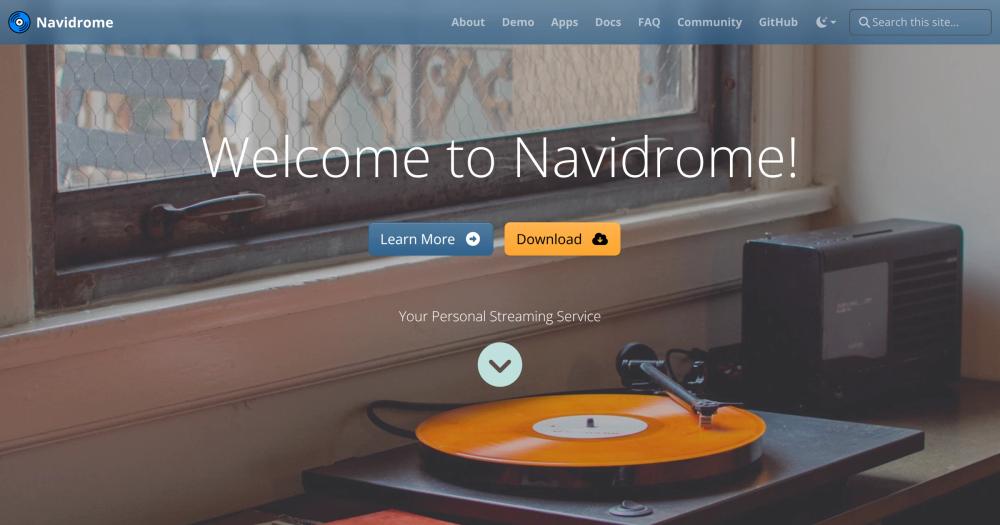
image of Navidrome
TL;DR

Navidrome is a self-hosted music server that streams your personal collection from any browser or Subsonic-compatible mobile app. It replaces paid streaming services like Spotify and Apple Music for music collectors who own their files, offering GPL-3.0 source code and no subscription cost. The server runs as a Docker container or pre-built binary, handles libraries tested up to 900,000 songs, and runs on hardware as modest as a Raspberry Pi.

Read the full breakdownHide the full breakdownWho it is for, how it works, trade-offs, the quick start and the FAQ
who it's for

Who Navidrome is for#

Music collectors moving off paid subscriptions

If you own a music library in FLAC or MP3 format and want on-demand access from any device, Navidrome replaces the monthly streaming subscription entirely. Your files stay on your hardware, your listening history stays private, and you pay only for the server.

Skip if:

If you don't already own a music library or regularly listen to new releases you haven't purchased, Navidrome won't fill the catalogue gap that commercial streaming services provide.

Audiophiles streaming lossless files

Navidrome serves FLAC files directly or transcodes them on the fly for bandwidth-limited connections. You control the format and bitrate delivered to each client, so full-quality playback is available on a home network while mobile receives a compressed stream as needed.

Skip if:

If your library is small enough to sync directly to a device via USB or cloud sync, running a server adds complexity without a meaningful benefit.

Homelab operators building a self-hosted media stack

Navidrome fits naturally alongside other self-hosted media services. The Docker image deploys in minutes, the low resource footprint means it coexists with other containers on the same hardware, and Subsonic API compatibility ties it into existing media client setups.

Skip if:

If you use Plex or Jellyfin and are satisfied with their music handling, adding a dedicated music server duplicates your media infrastructure without a clear benefit.

Households sharing a music library with separate accounts

Multi-user accounts give each person in a household their own playlists, play counts, and favourites without mixing listening history. Multi-library support separates content by access level, so audiobook listeners and music listeners share the same server without cluttering each other's libraries.

Skip if:

If you need fine-grained permissions for a large team or organization, Navidrome's multi-user model is designed for household scale and may be too limited.

the problem

The problem it solves#

Music streaming subscriptions charge monthly for access to catalogues you don't own, on terms that change without notice. An album you've relied on can disappear overnight when a label pulls licensing rights. For music collectors who rip CDs, purchase downloads, or maintain carefully tagged FLAC libraries, there is no fit in the commercial market: Spotify, Apple Music, and Tidal stream their own catalogues, not yours.

The gap is widest for listeners who care about file quality and format control. Paid platforms control the bitrate and format they deliver; your own FLAC rips have no home in those systems. Accessing personal files from mobile means working around the problem with file-sync apps or accepting streams below the quality of your source files.

how Navidrome solves it

How it solves it#

Subsonic API compatibility

Navidrome implements the OpenSubsonic API, the de facto standard for music server clients. This gives you access to the full ecosystem of iOS and Android Subsonic clients without locking you into the built-in web UI. The API covers streaming, playlist management, and playback history, so any compatible client provides a full-featured mobile experience.

Large library performance

The server has been tested against collections of 900,000 songs with a mix of FLAC and MP3 files. It handles compilations with Various Artists and multi-disc box sets correctly. Library monitoring runs in the background, importing new files and reloading updated metadata automatically without manual intervention.

On-the-fly transcoding

Navidrome converts audio formats in real time as files are requested, reducing bandwidth on mobile connections. Transcoding is configurable per user and per player, so a home network client receives full-quality audio while a mobile client gets a lower-bitrate stream. Opus encoding is supported.

Multi-user accounts with separate libraries

Each user account maintains independent play counts, playlists, and favourites. Multi-library support organizes music into separate collections with per-user access controls, useful for separating music from audiobooks or personal libraries from family ones.

Low resource footprint

The server is written in Go and runs as a single self-contained binary. It runs on a Raspberry Pi or a modest VPS without dedicated hardware. Docker images are provided, and pre-built binaries ship for Linux, macOS, Windows, and ARM platforms including Raspberry Pi.

Automatic library monitoring with lyrics support

Navidrome watches your music directory for changes and imports new files and updated metadata without manual steps. It reads lyrics from sidecar files in multiple formats (.lrc, .ttml, .srt, .txt) and from embedded tags, displaying them in the web UI and surfacing them to compatible clients.

strengths · trade-offs

Strengths and trade-offs#

Strengths

  • Runs on a Raspberry PiNavidrome is designed for resource-limited hardware, with Raspberry Pi listed as a supported platform in the README and pre-built ARM binaries shipped on every release. A Raspberry Pi handles a household music library without dedicated server hardware, keeping self-hosting accessible on modest equipment.
  • GPL-3.0 with no subscription feesThe server is free to run on your own hardware with no licensing cost and no subscriber account required. GPL-3.0 makes the source auditable and forkable. There is no monthly bill, no per-user seat charge, and no service cancellation risk.
  • Wide Subsonic client ecosystemThe OpenSubsonic API has years of client development behind it across iOS, Android, desktop, and media center integrations. Switching server versions or migrating to different hardware requires no client reconfiguration: existing apps connect to the new server without changes.
  • Active development with 24,500+ starsThe project has been actively developed since 2016, with 24,524 GitHub stars, 1,805 forks, and regular releases shipping new features and bug fixes. An active Discord and Reddit community provides support alongside the GitHub issue tracker.

Trade-offs

  • -No built-in music catalogueNavidrome streams only what is in your music directory. It has no licensing agreements, no catalogue of its own, and no discovery features. If you want access to music you don't own files for, a commercial service is still necessary. This tool serves people who already have a library.
  • -Mobile experience depends on third-party clientsThe built-in web UI is modern and functional, but most mobile use goes through third-party Subsonic clients. App quality varies across the ecosystem: some clients are actively maintained, others are abandoned. Finding a client that suits your preferences requires evaluation across the available options.
versus alternatives

Navidrome vs alternatives#

Navidrome vs Spotify, Apple Music, and Tidal

Navidrome and commercial music streaming services share the same end goal: music on demand from any device. The comparison divides on one fundamental difference: Navidrome streams files you already own from infrastructure you control; Spotify, Apple Music, and Tidal stream licensed catalogues from their infrastructure at a monthly subscription fee.

Your library vs their catalogue

Navidrome has no subscription cost, no licensing agreements, and no content that disappears when a label renegotiates. Your files stay on your hardware under your control, served by GPL-3.0 software you can inspect and run indefinitely. For audiophiles and collectors, Navidrome serves lossless FLAC files at full quality with on-the-fly transcoding for bandwidth-limited mobile connections, without depending on what any service chooses to license.

Where paid services still fit

Navidrome has nothing to play without your files. For users who primarily discover and listen to music they haven't purchased, Spotify, Apple Music, and Tidal are the only option: each offers tens of millions of licensed tracks and curated playlists. The two approaches are complementary. Music collectors often run Navidrome for their own library while keeping a streaming subscription for discovery and new releases.

FeatureNavidromeSpotify / Apple Music / Tidal
LicenseGPL-3.0Proprietary
Self-hostingYesNo
Music catalogueYour own files onlyTens of millions of licensed tracks
Monthly costNone (self-hosted)Subscription required
Lossless audioYes (your FLAC files)Varies by service and plan
Mobile clientsThird-party Subsonic appsFirst-party apps
Content permanencePermanent (files you own)Subject to licensing agreements
install · quick start

Quick start#

bash
Download the pre-built binary for your platform (Linux, macOS, Windows, Raspberry Pi) from GitHub Releases: https://github.com/navidrome/navidrome/releases/latest
tech stack · detected from GitHub

What it's built on#

Languages
GoJavaScriptRust
Frameworks
React
frequently asked

FAQ#

Is Navidrome free to use?

Yes. Navidrome is GPL-3.0 licensed and free to run on your own hardware. Running it costs nothing beyond the server itself. Managed hosting through partners like PikaPods charges for the hosting infrastructure, not the software.

What mobile apps work with Navidrome?

Any Subsonic or OpenSubsonic-compatible client works with Navidrome. The project documents a list of tested compatible apps for iOS and Android on its website. The built-in web player also works in mobile browsers without installing a separate app.

How does Navidrome handle very large music libraries?

Navidrome has been tested against collections of 900,000 songs with a mix of FLAC and MP3 files. Library indexing runs in the background, and the server monitors for new or changed files automatically without manual updates. Performance on large libraries is a core design goal.

Can I run Navidrome on a Raspberry Pi?

Yes. Navidrome ships pre-built binaries for Raspberry Pi as a first-class target on every release. The README explicitly calls out Raspberry Pi as a supported low-resource platform. The self-contained binary and low memory footprint make it one of the few music servers that runs comfortably on single-board computers.

Does Navidrome support lossless audio formats like FLAC?

Yes. Navidrome streams virtually any audio format, and on-the-fly transcoding lets it serve different quality levels to different clients. A home network client receives the original lossless FLAC file; a mobile client on a data connection receives a compressed stream. Per-user and per-player transcoding settings control the behaviour independently.

also worth a look

Similar open-source tools#

Koel

Alternative toSpotify

Self-hosted music streaming with smart playlists and mobile apps

  • 17,326 GitHub stars
  • MITLicence MIT

CleanYourTV

Featured

Alternative toATV Launcher Pro

Debloat any Android or Google TV over Wi-Fi and get an Apple TV-style home.

  • 51,495 GitHub stars
  • MIT LicenseLicence MIT License

OpenClaw

Featured

Alternative toMuse

Self-hosted AI assistant for WhatsApp, Telegram, and more

  • 393,917 GitHub stars
  • MITLicence MIT

Inbox Zero

Featured

Alternative toSuperhuman

AI email assistant that drafts replies and clears your inbox

  • 12,889 GitHub stars
  • AGPL-3.0Licence AGPL-3.0

rakazo

Featured

Alternative toGrok Bot

AI teammates you own: your keys, your model, your machine.

  • 6,568 GitHub stars
  • Apache-2.0Licence Apache-2.0

paperclip

Featured

Alternative toGrok Bot

Self-hosted AI agent management with org charts and budgets

  • 109,899 GitHub stars
  • MITLicence MIT
by category

Open source tools in these categories#

245

Business & Productivity

OpenClaw, Excalidraw, RustDesk
Hostinger

Self-host Navidrome on a Hostinger VPS

Keep it running 24/7, even when your laptop is off. A Hostinger VPS gives it a server of its own.

  1. 01

    Choose a plan

    Starts from $6.49/mo

  2. 02

    Apply

    Extra 10% off yearly plans

  3. 03

    Install Navidrome

    On a server that stays on

  4. 04

    Start building

    Focus on the app, not the server

Deploy on Hostinger

Sponsors

Inbox Zero

Alternative toSuperhuman

AI email assistant that drafts replies and clears your inbox

  • 12,889 GitHub stars
  • AGPL-3.0Licence AGPL-3.0
  • #Email

rakazo

Alternative toGrok Bot

AI teammates you own: your keys, your model, your machine.

  • 6,568 GitHub stars
  • Apache-2.0Licence Apache-2.0
  • #AI Agents

SnitchFeed

Live monitoring on LinkedIn, X, Reddit & more. Agentic social listening for startups.

Marketing & Growth

Advertise your product

New open source projects by email

The projects we add and every new guide. Free, unsubscribe any time.

Find open source alternatives to paid software

/
  • Claude Code to OpenCode
  • Jira to Windshift
  • Notion to AppFlowy
  • Slack to Mattermost
  • Linear to GitLab
  • Wispr Flow to Handy
  • Arc to Zen Browser
  • CapCut to Concat
  • Grok Bot to rakazo
  • Superhuman to Inbox Zero
  • Airtable to AITable
  • Muse to OpenClaw
  • Railway to Coolify
  • GitHub Copilot to Cline
  • Datadog to Netdata
  • Microsoft Teams to Rocket.Chat
  • Confluence to Docmost
  • Pinecone to Qdrant
  • Zapier to n8n
  • Devin AI to OpenHands
  • Firebase to Supabase
  • 1Password to KeePassXC
  • Contentful to Strapi
  • Adobe Premiere Pro to Shotcut