Polar vs Lemon Squeezy
Lemon Squeezy is winding down and stops processing payments on 2027-03-31 (announced 2026-11-16), so it is not a platform to start on. Both it and Polar are merchant of record services for subscriptions and digital products with global tax handling. Polar is open source and adds event-based usage metering, and it has no built-in affiliate feature.
Polar vs Paddle
Paddle is a proprietary merchant of record platform, the other well-known name in the category. Both take on tax, fraud and chargebacks for their customers on the hosted service; the clearest differences are the license and the code.
| Feature | Polar | Paddle |
|---|
| License | Apache-2.0 | Proprietary |
| Source code | Public on GitHub | Not available |
| Merchant of record | Yes, on the hosted service | Yes |
| Self-hosting | Possible, but you become the seller | No |
| Usage-based metering | Yes, event-based | Check Paddle's docs |
| Affiliate program | None built in; third-party tool | Check Paddle's docs |
Polar is the better fit when you want an auditable open source codebase and event-based metering. Check Paddle's current documentation for the rows marked there before deciding.
Polar vs Stripe Billing
On a standard Stripe Billing setup you remain the seller, so sales tax, VAT remittance and chargeback liability stay with you; Stripe's Managed Payments is a separate merchant of record offering. On Polar's hosted service those obligations move to Polar.
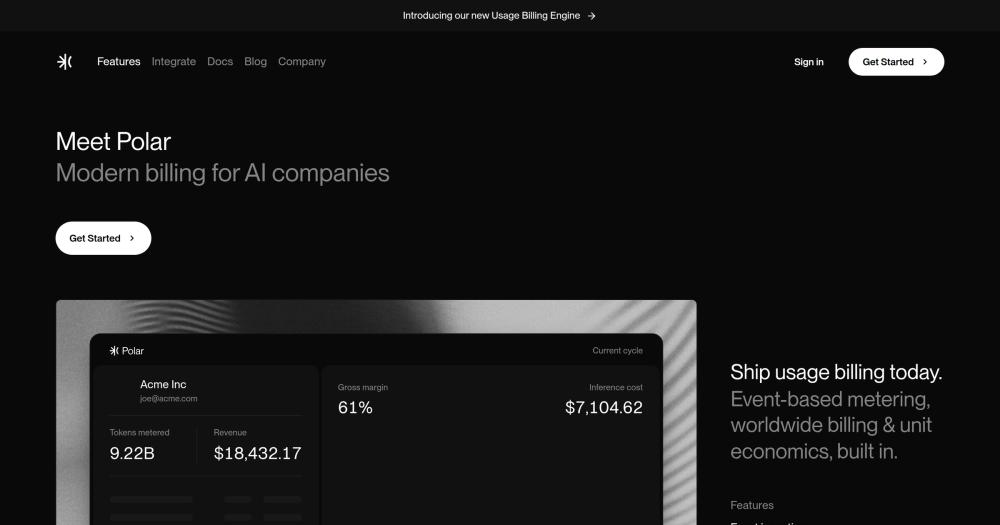
Polar's metering is built for AI workloads: usage events feed real-time meters per customer, credits draw down before overage is billed, and gross margin per customer is a built-in view. Stripe Billing is the better fit if your stack is already built around Stripe and you want to keep the seller role.