

Who VoidZero is for#
Frontend teams standardizing project setup
Use Vite+ when many apps need the same dev, check, test, and build workflows without copying config between repositories.
Skip if:
Your projects use framework-specific CLIs that already own the full build pipeline.
Monorepo maintainers reducing scripts
Use Vite+ to consolidate common package tasks and caching into one CLI across workspace packages.
Skip if:
Your monorepo already has a mature task runner setup that the team understands.
Teams migrating Vite projects
Use `vp migrate` when existing Vite projects have split lint, format, test, and staged-file config that you want to merge into one config file.
Skip if:
You need a no-change maintenance window with no tooling migration risk.
The problem it solves#
Modern web projects accumulate separate tools for runtime setup, package management, dev servers, formatting, linting, tests, builds, and monorepo task caching. Each tool adds configuration files, version drift, and onboarding steps. Small teams often lose time maintaining toolchain glue instead of shipping application work.
How it solves it#
One CLI for the web toolchain
The `vp` command wraps create, dev, check, test, build, run, pack, install, and migration workflows. That reduces the number of commands new contributors must learn.
Bundled Vite ecosystem tools
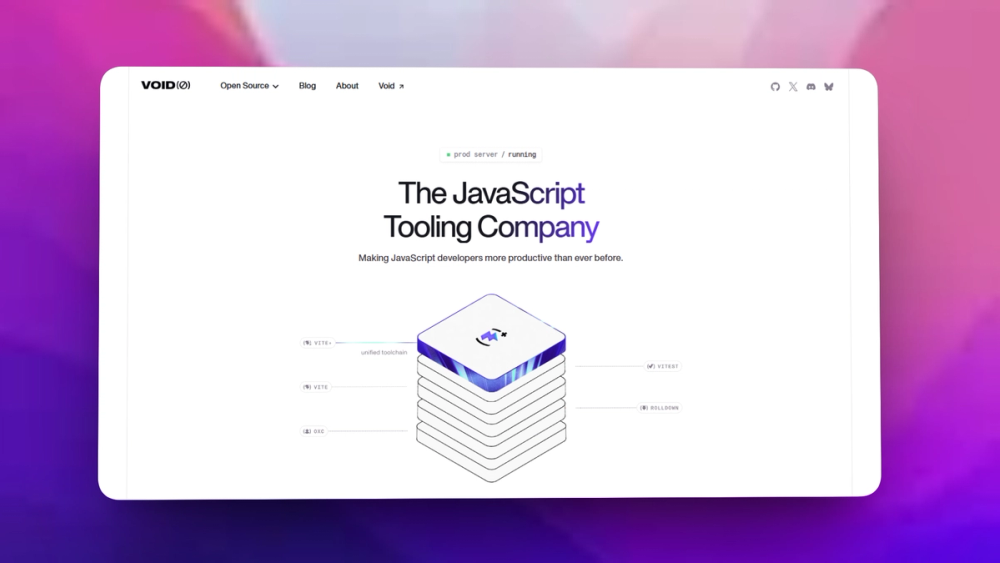
Vite+ combines Vite, Vitest, Oxlint, Oxfmt, Rolldown, tsdown, and Vite Task as one dependency for common local development needs.
Single typed configuration file
Uses `vite.config.ts` to hold dev, build, test, lint, format, task, and staged-file settings. That gives teams one place to reason about project workflow behavior.
Package manager detection
Vite+ detects pnpm, npm, or Yarn based on lockfiles and package metadata, reducing accidental package manager drift.
Strengths and trade-offs#
Strengths
- Reduces toolchain sprawlVite+ is strongest when a project already uses several Vite-adjacent tools. It turns many separate config surfaces into one CLI and one config file.
- Good monorepo fitThe `vp run` task workflow includes caching and dependency-aware scheduling, which matters for teams coordinating builds and checks across packages.
- MIT-licensed project toolingVite+ is fully open source under MIT, making it easier to adopt in commercial projects than tools with restrictive licenses.
Trade-offs
- -Young ecosystem surfaceVite+ combines several fast-moving tools, so teams should expect more change than with mature single-purpose CLIs. Conservative teams may want to wait for broader production usage.
- -Best for Vite-centered stacksProjects built around non-Vite bundlers or custom build systems may not benefit enough to justify migration.
Quick start#
Install Vite+ manually in an existing Vite project before migrating config:

```bash
npm install -D vite-plus @voidzero-dev/vite-plus-core@latest
```What it's built on#
- Languages
- JavaScriptRustTypeScript
- Frameworks
- Vue
FAQ#
What is VoidZero Vite+?
Vite+ is a unified web development CLI from VoidZero that combines common Vite ecosystem workflows into one tool.
What tools does Vite+ include?
Vite+ bundles Vite, Vitest, Oxlint, Oxfmt, Rolldown, tsdown, and Vite Task as parts of the toolchain.
Is Vite+ open source?
Yes. Vite+ is fully open source under the MIT license.
Similar open-source tools#

terminal-browser
Full Chromium browser rendering inside your terminal

openship
Self-hosted deployment platform with built-in CI/CD

swc
Fast JavaScript/TypeScript compilation and bundling

EmDash CMS
Web-based CMS for creating and managing AI playgrounds

Zed
High-performance open source code editor with built-in AI

Coolify
Self-hosted Heroku and Vercel alternative for any app